
Is Luxury Real Estate a Good Investment? What Buyers Should Consider

Luxury real estate in Haliburton, particularly private lakefront property, can be a sound long-term investment, but the math works differently than it does for a standard cottage. Scarcity and carrying costs matter more than short-term price movement, financing looks different above a certain price point, and the buyers who do well treat this as a long hold, not a flip.
Private lakefront property in Haliburton can be a strong long-term investment because of finite shoreline supply and consistent buyer demand from the GTA, but returns depend more on carrying costs, financing structure, and holding period than on the purchase price alone. It works best as one piece of a diversified plan, not a short-term play.
Quick Answer: Yes, with conditions. Luxury lakefront in Haliburton holds value well over a long horizon because the supply is fixed, but it isn't a liquid asset, and buyers who need to exit quickly or who underestimate carrying costs are the ones who end up disappointed.
Key Takeaways
- Private lakefront is a genuinely scarce asset in Ontario. There is a fixed number of shoreline properties, and that number does not grow.
- Carrying costs at the luxury tier (insurance, septic, forest management, staffing) run meaningfully higher than they do on a standard cottage and belong in the return calculation, not as an afterthought.
- Financing above roughly $2 to $3 million often shifts toward private or specialized lenders, which changes the timeline and the terms compared to a standard mortgage.
- Exit timelines at this tier are longer than the general market. The buyer pool is smaller and more deliberate, which affects how quickly you can sell if your plans change.
- Lifestyle value and financial return are two different things, and conflating them is where a lot of "is this a good investment" conversations go wrong.
Every buyer looking at a multi-million dollar property in Haliburton eventually asks some version of the same question: is this actually a good investment, or is it an expensive way to buy a nice view?
The honest answer is that it depends on what you're measuring against, and on treating this as a specific asset class with its own rules rather than a bigger version of a standard cottage purchase. The Haliburton Gold Group has represented both ends of this market, from entry-level waterfront to estate-scale private lake properties, and the pattern holds across both: the buyers who do well understand the difference between price appreciation and total return, and they plan for a hold measured in years, not quarters.
What "Investment" Means Differently at the Luxury Tier
At the luxury level, real estate investment isn't primarily about flipping for a quick gain. It's about acquiring a scarce, generally illiquid asset that tends to hold and grow value over a long horizon, while also delivering a lifestyle return that doesn't show up on a balance sheet but matters to the people paying the carrying costs.
That distinction changes how you should evaluate a purchase. A property that looks expensive on a pure price-per-square-foot basis can still be a sound long-term hold if the land, water rights, and privacy it delivers are genuinely scarce. Conversely, a property priced attractively on paper can be a weaker investment if it comes with carrying costs or access limitations that erode the return over time.
Private Lakefront as an Asset Class: Scarcity and Carrying Costs
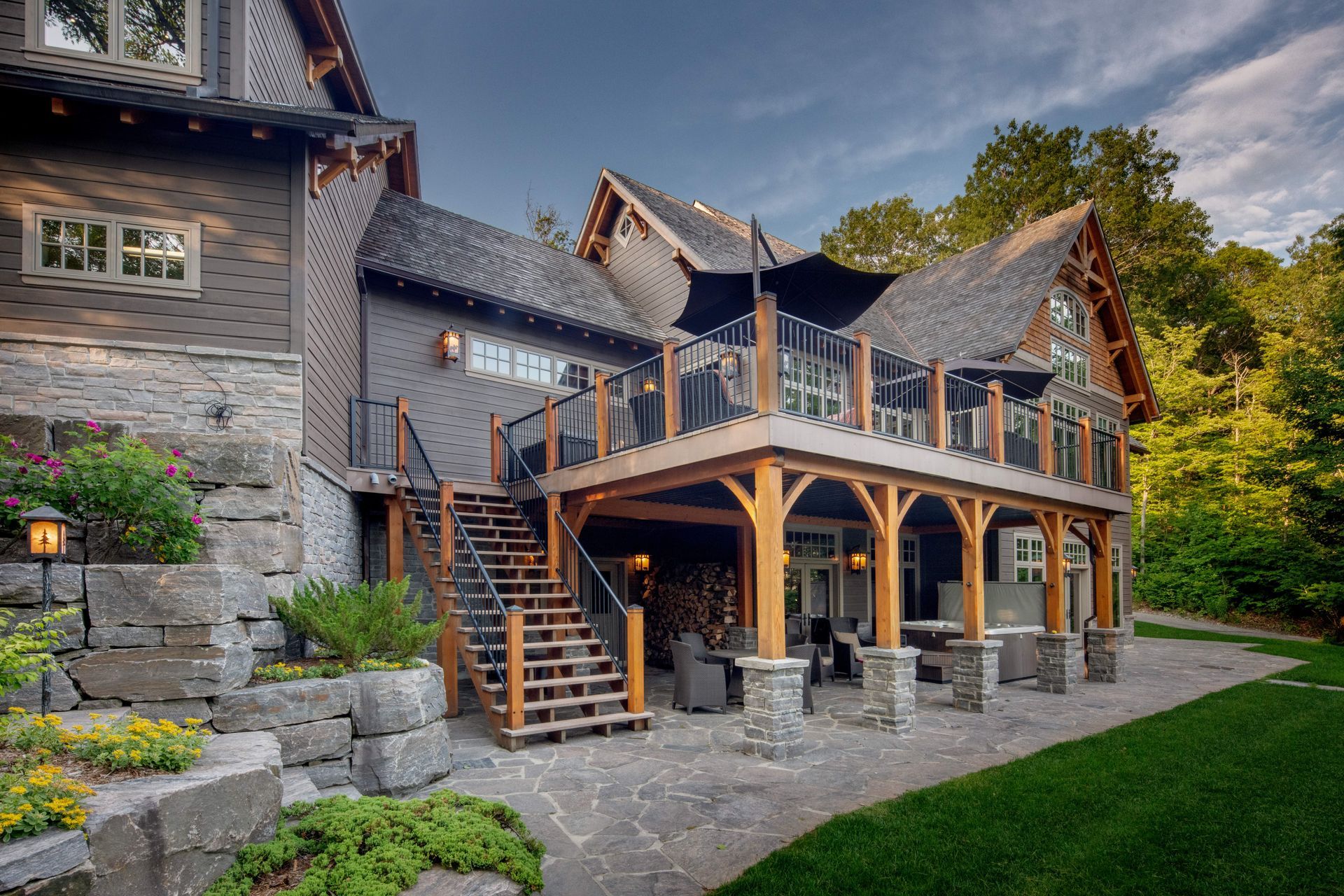
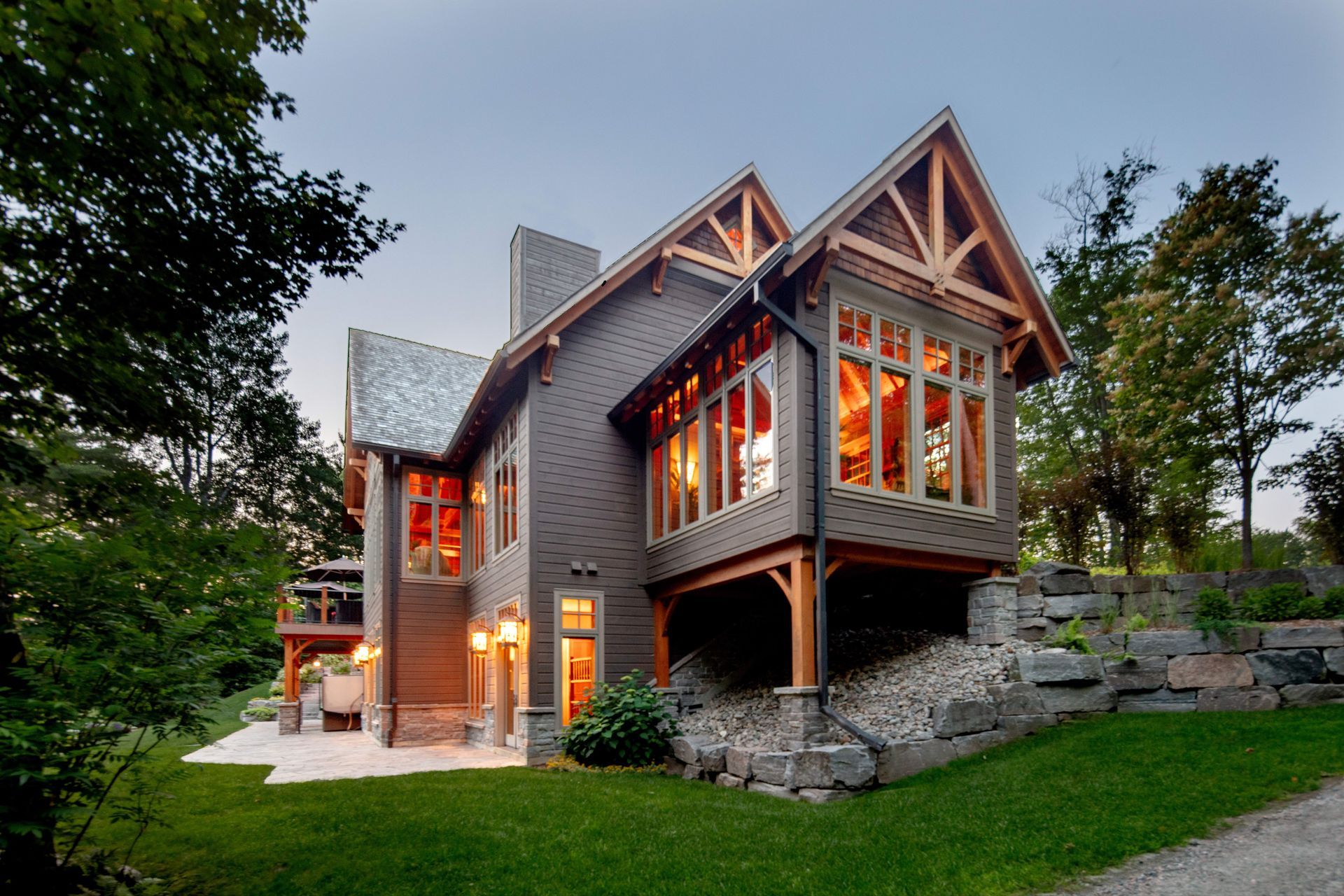
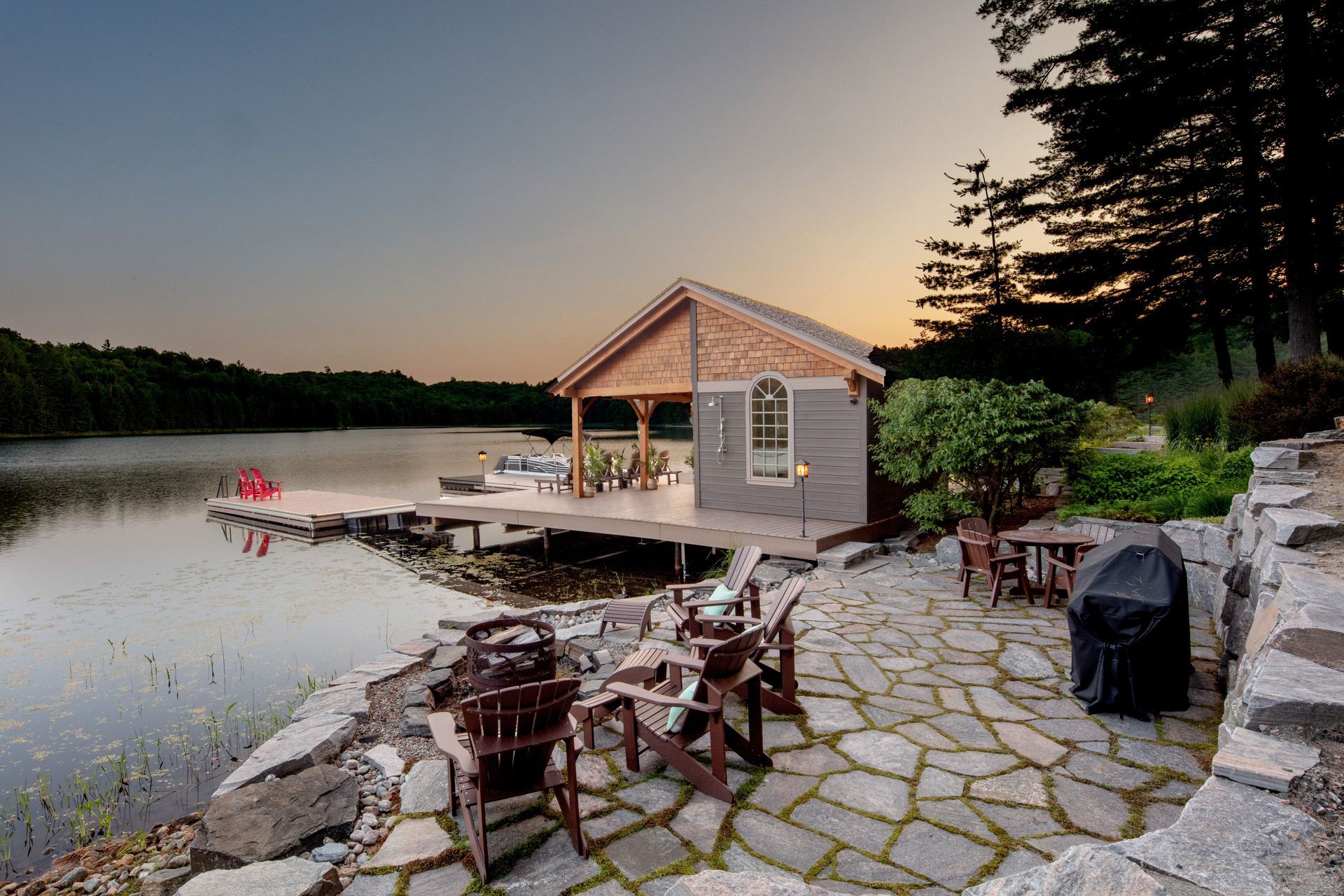
The core investment case for private lakefront in Haliburton is straightforward: there is a fixed supply of shoreline in the county, and no amount of demand creates more of it. Unlike condos or subdivided residential land, waterfront cannot be manufactured. That scarcity is the foundation of the long-term investment thesis, and it's the reason well-located waterfront has historically held value better than inland property during broader market corrections.
Scarcity, though, is only half the calculation. The other half is what it actually costs to hold a property like this year over year. Insurance on waterfront and lakefront property runs higher than inland coverage because of flood and erosion exposure, and that premium increases further with private water systems, boathouses, or detached structures. Septic and well systems near water face stricter design and inspection requirements. If the property includes managed forest acreage, enrollment in the Managed Forest Tax Incentive Program can reduce property tax by up to 75%, but only if the required forest management plan is maintained.
None of these costs are disqualifying. They just need to be part of the return calculation from day one, not discovered in year two.
Appreciation vs. Lifestyle Value: Separating the Two
A property that delivers real, tangible lifestyle value to your family every summer is doing its job even if its price appreciation lags a pure financial benchmark in a given year. That's a legitimate reason to buy. It's just a different reason than pure capital appreciation, and conflating the two leads to disappointment on both sides.
If your primary goal is financial return, evaluate the property the way you'd evaluate any other illiquid, scarce asset: against its carrying costs, its holding period, and comparable sales trends over a five to ten year window rather than the last two quarters. If your primary goal is a property your family will use and eventually pass down, the financial case still matters, since you'll want the asset to hold its value, but it's no longer the only metric that decides whether the purchase was a good one.
Financing at This Level: What's Different
Above roughly the $2 to $3 million mark, financing for luxury and estate-scale property in Haliburton often moves away from a standard bank mortgage and toward private lenders or specialized high-net-worth lending programs. Some sellers at the top of the market require proof of liquidity or a substantial pre-approval before entertaining a formal offer, specifically to protect the privacy and seriousness of the process.
This affects timelines. Deposits at this tier are typically larger, often in the range of 5% to 10% of the purchase price, and lenders may require more extensive documentation than a conventional residential mortgage. Buyers who assume the process will move at the same pace as a standard cottage purchase sometimes find themselves surprised by how much lead time proper financing takes to arrange.
Exit Timeline and Liquidity: The Question Buyers Skip
This is the part of the investment conversation most buyers don't ask about until they're already trying to sell. Luxury and private lakefront property is not a liquid asset. The buyer pool for a multi-million dollar Haliburton estate is smaller and more deliberate than the buyer pool for a standard cottage, which means listing-to-close timelines tend to run longer, particularly for the largest and most unique properties.
That's not a reason to avoid this tier of the market. It's a reason to plan your holding period accordingly. If there's a realistic chance you'll need to sell within a year or two, luxury real estate is a poor fit regardless of how strong the underlying asset is. If you're planning to hold for five, ten, or twenty years, the illiquidity matters far less, and the scarcity of the asset works in your favour.
The Bottom Line on Returns
Luxury real estate in Haliburton, and private lakefront in particular, can absolutely be a good investment. It just isn't a good investment in the same way a liquid financial asset is. The return comes from scarcity held over a long timeline, offset against carrying costs that need to be honestly accounted for, with a lifestyle dividend that most buyers ultimately consider part of the return rather than separate from it.
For a closer look at how current pricing and market correction affect the numbers specifically on private lakefront property, our earlier analysis walks through the recent pricing data in detail. If you're weighing a purchase and want to talk through the due diligence side of things first, our due diligence checklist covers what to verify before you commit.
Frequently Asked Questions
Is luxury real estate in Haliburton a good long-term investment?
Generally yes, for buyers planning to hold for five or more years. The scarcity of private lakefront and large acreage supports long-term value retention, though returns depend heavily on carrying costs and how the property is used.
How does financing work for luxury properties over $2 million in Haliburton?
Financing often shifts toward private lenders or specialized high-net-worth lending programs above roughly the $2 to $3 million mark, with larger deposits, typically 5% to 10%, and more extensive documentation than a conventional mortgage.
What carrying costs should I expect on a luxury lakefront property?
Expect higher insurance premiums than inland property, septic and well maintenance costs, potential forest management obligations if enrolled in MFTIP, and property tax that reflects waterfront assessment. These should be modeled into the return calculation, not treated as an afterthought.
How liquid is luxury real estate compared to other investments?
It's not liquid. The buyer pool for multi-million dollar Haliburton estates is smaller and more deliberate than the general market, and listing-to-close timelines tend to run longer, especially for the largest or most unique properties.
Is private lakefront a better investment than shared waterfront?
Private lakefront commands a scarcity premium because there's no public access and a smaller supply, which can support stronger long-term value retention. Shared waterfront trades that scarcity for a larger buyer pool and typically faster resale, which matters more if liquidity is a priority.
Trust & Authority
Jeff and Jess Wilson lead the Haliburton Gold Group, bringing a combined four decades of experience representing buyers and sellers across Haliburton County's luxury and waterfront market, including estate-scale private lakefront transactions.
Ready to Talk Through the Numbers?
If you're weighing whether a specific property makes sense as a long-term hold, connect with the Haliburton Gold Group team to talk through carrying costs, financing options, and what the local market data actually supports for that property.
Learn More